In recent years, manufacturing and packaging companies around the world have faced a common challenge — labor shortages. This issue is particularly prominent in industries such as food, pharmaceuticals, and personal care, where high packaging efficiency is essential. Difficulties in recruitment, rising labor costs, and high employee turnover are severely affecting production line efficiency and delivery capabilities.
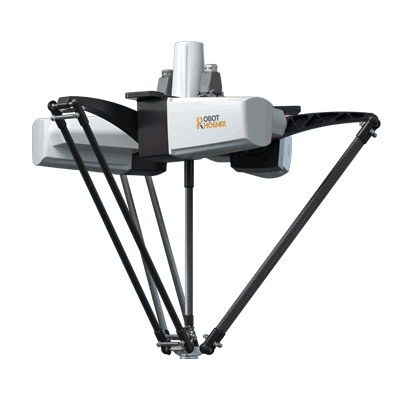
Against this backdrop, high-speed delta robots are emerging as a powerful solution to packaging automation. Compared to traditional labor and conventional robotic arms, delta robots offer significantly higher speeds and greater flexibility, making them ideal for high-speed picking, sorting, and packing tasks.
Why Is the Labor Shortage in the Packaging Industry Getting Worse?
Highly Repetitive and Harsh Work Environment
Packaging jobs often involve prolonged standing, fast-paced handling, and intensive repetitive labor, making them unattractive to workers.
Rising Labor Costs
With increases in minimum wage standards and employee benefit expectations, the cost of labor is steadily climbing.
Lack of Stability
Packaging roles typically suffer from high turnover, short training cycles, and inconsistent efficiency, which disrupts production schedules.
Why Are Delta Robots the Ideal Solution?
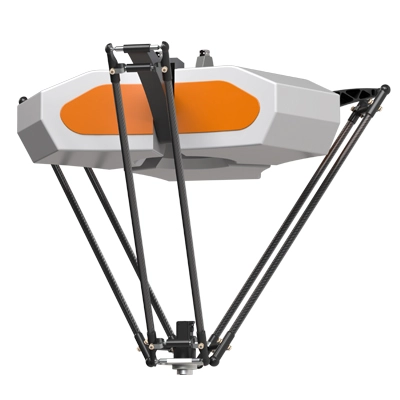
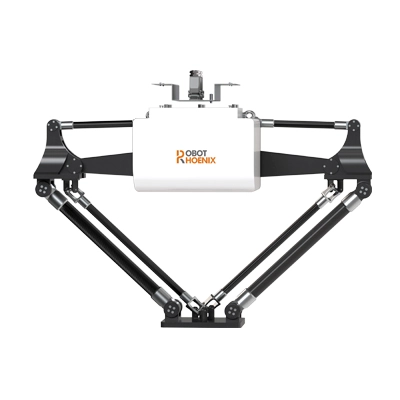
The delta pick and place robot is a classic type of high-speed parallel robot. Thanks to their unique triangular arm design, they can perform close to a hundred pick-and-place operations per minute, excelling in sorting, positioning, and packing operations. Here are their key advantages in addressing labor shortages:
1. Ultra-High Speed That Outperforms Human Labor
On high-speed packaging lines, delta robots can operate continuously and reliably, achieving 60–120+ pick-and-place cycles per minute, effectively replacing multiple workers and significantly increasing production throughput.
2. Stable 24/7 Operation
Robots don’t require shifts or rest breaks and don’t suffer from fatigue, ensuring consistent performance. This is especially critical for industries like food, personal care, and pharmaceuticals, where continuous production is vital.
3. Seamless Integration with Vision Systems for Flexible Sorting
By integrating with vision systems, delta robots can identify items of varying positions, shapes, and orientations, enabling flexible picking and supporting automated packaging of multi-size, multi-type products.
4. Reduced Labor Costs and Short Payback Period
Although the initial investment is higher than manual labor, many companies have seen a return on investment within six to eighteen months under suitable conditions. The actual timeline depends on project configuration, production scale, and labor cost structure. In the long run, robotic automation helps reduce labor dependency and improve production efficiency.
Typical Application Scenarios
Ideal for automated sorting and packing of prepackaged food such as biscuits, bread, candy, and bagged snacks. On high-speed lines, delta robots can efficiently handle tasks like multi-piece arranging, tray loading, and boxing, significantly improving packaging efficiency and reducing manual intervention.


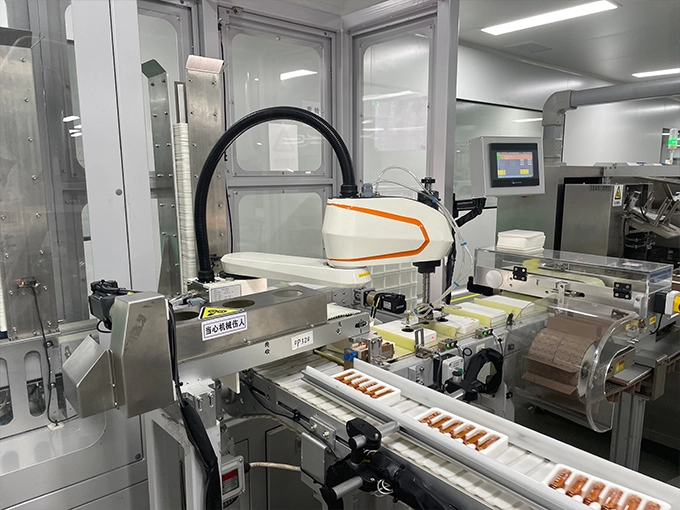
Used for auto-boxing and cartoning of disposable syringes, IV bags, ampoules, and sachet medications. Delta robots meet the strict requirements of clean, stable, and high-throughput packaging, and can work with vision systems for fast identification and precise placement, ensuring the sterility and efficiency of the packaging process.


Supports diverse packaging tasks for personal care and beauty products, including lid application and gluing for wet wipes, automated assembly for cushion compacts, and precise placement for eye shadow palettes. Delta robots’ flexible structure and speed are well-suited to frequent product changes and mixed product lines.


In a demonstration project for a food industry client, industrial robot manufacturers like Phoenix delivered a high-speed delta robot solution for a bagged candy packaging line. The task required the robot to pick randomly oriented bagged candies from a conveyor and place them precisely into compartments for subsequent automatic packaging.
Process Flow:
Visual recognition → Delta robot picking → Synchronized tracking of conveyor speed → Accurate placement into compartments.
Challenges:
The conveyor ran continuously, demanding fast robot response and precise trajectory tracking.
The compartment spacing was tight, requiring high repeatability for accurate placement.
Solution and Results:
We deployed high-speed delta robots integrated with vision system and motion control algorithms to accurately recognize and pick candy bags in real time. The final system successfully met the client’s required throughput, streamlining the packaging process and minimizing errors caused by manual handling.
Conclusion
As automation continues to advance in the packaging industry, traditional manual roles are increasingly being replaced by smarter and more efficient robots. Delta robots not only help address the labor shortage challenge but also serve as a powerful “engine” that drives production lines forward with speed and stability.
If you’re facing bottlenecks or labor issues in your packaging processes, it may be time to consider introducing delta robots to accelerate your productivity and modernize your operations.

 EN
EN  ja
ja  ko
ko  fr
fr  de
de  es
es  ru
ru  pt
pt  ar
ar  vi
vi  ur
ur 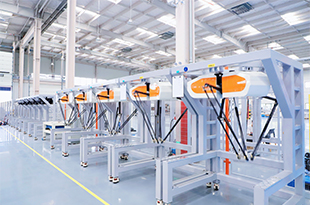 Learn More