Zhejiang Robotphoenix Intelligent Technology Co., Ltd. is poised to step into the capital market and has garnered rising market attention.
Looking back over the past year, the company has taken frequent strategic moves. On June 30 last year, Robotphoenix submitted its listing application to the Hong Kong Stock Exchange with ABC International as the sole sponsor, planning to be listed on the HKEX Main Board under Chapter 18C Specialised Technology Company Rules. On November 17, it officially unveiled Hogene, its first humanoid robot, marking a core breakthrough in the booming embodied intelligence sector. On April 20 this year, the company successfully passed the HKEX listing hearing. Its public offering took place from May 8 to May 13, with a global placement of 24.6 million H-shares priced at HK$30.5 each. The margin over-subscription ratio hit 14,891 times, setting a new all-time high in Hong Kong stock market history and claiming the title of the most heavily oversubscribed stock. Trading of Robotphoenix H-shares is scheduled to commence at 9:00 a.m. on Monday, May 18 on the Hong Kong Stock Exchange.
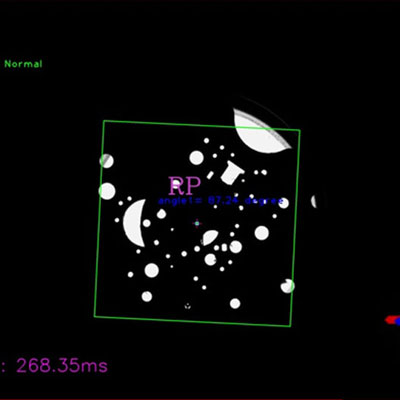
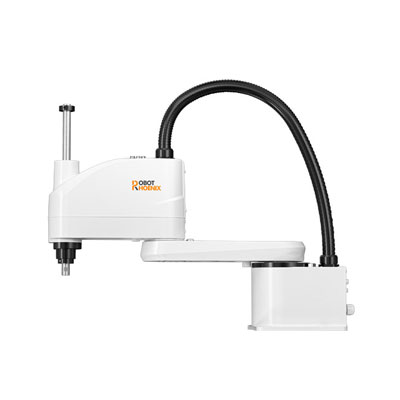
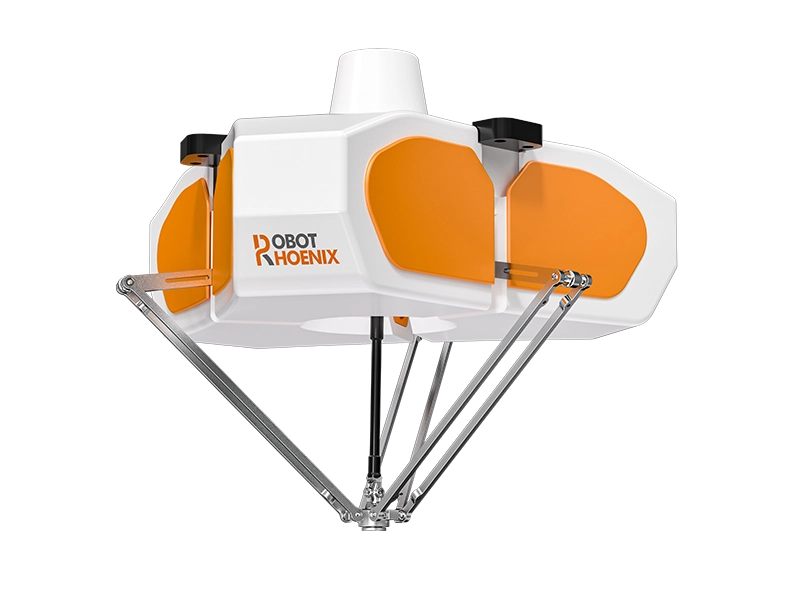
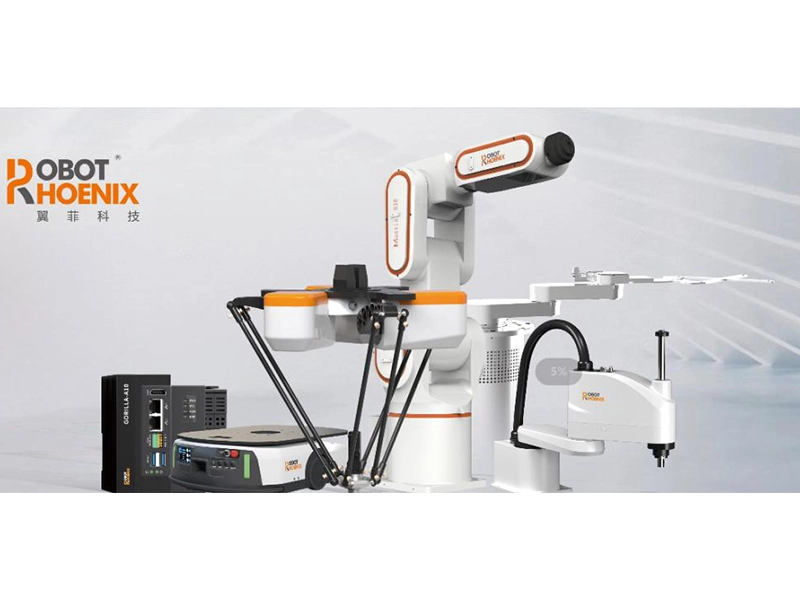
Founded in 2012, Robotphoenix is a leading comprehensive industrial robot manufacturer in China and a national-level Specialized, Refined, Differentiated and Innovative "Little Giant" enterprise. It focuses on the R&D, manufacturing and commercial application of industrial robots, and devotes itself to intelligent upgrading of the light industry. The company has built a full-stack robotic technology framework covering brain, vision, manipulator and mobile chassis, and formed a full-range product portfolio including parallel robots, mobile robots, SCARA robots, wafer handling robots and humanoid robots. Equipped with self-developed controllable control systems and vision systems, it provides one-stop intelligent automation solutions for material loading & unloading, sorting, packaging, visual inspection, assembly and gluing, serving wide-ranging sectors such as consumer electronics, auto parts, new energy, medical care, fast-moving consumer goods and semiconductors.
Robotphoenix’s sound development over nearly 14 years is driven by its seasoned technology-oriented management team with rich industrial experience and global vision, led by Dr. Zhang Sai, a top-tier academic entrepreneur and company founder.
"If you have an ambitious dream, stick to it firmly," Zhang Sai remarked in a recent exclusive interview with Cls.cn.
He wrote the corporate vision — To build a world-class Chinese robot enterprise — on the first page of the employee handbook. He frankly stated in the interview, "As a private startup, aiming to become a world-class Chinese robot enterprise seems impractical at the current stage, for we still have a long way to go before catching up with global industry giants. Yet dreams only stand a chance to come true when we dare to embrace them."
Such idealistic remarks sound particularly sincere in the rational and technology-driven robotics industry.
Against the backdrop of accelerated industrial automation, light industry robots have emerged as a fast-growing segmented track in recent years. Zhang Sai pointed out that the development of industrial robots is highly tied to the prosperity of downstream industries. "Essentially, robotics industry growth hinges on the expansion of its served sectors." The rise of global robot leaders was fueled by the booming automotive industry, while the rapid growth of China’s robotics sector over the past decade is closely linked to the prosperity of light industries including 3C electronics and consumer goods.
China has become the core engine of global industrial changes, serving not only as the world’s largest robot consumption market but also a key hub for technological and application innovation. Zhang Sai believes automation acts as a powerful booster rather than an inevitable choice for industrial development, and will embrace explosive growth amid rising labor costs, higher efficiency requirements and growing product complexity.
This underpins Robotphoenix’s strategic focus on light industry robots targeting high-frequency repetitive working scenarios featuring high speed, high precision and stable operation. In his view, this is a long-term promising track with solid growth momentum far exceeding short-term trending industries.
Adhering to independent R&D as its core development strategy, Robotphoenix has invested heavily in controllers, algorithms and vision systems since its inception, and gradually completed its product lineup covering parallel robots, SCARA robots, small six-axis robots and mobile robots. The company is also building an AI professional team and launching intelligent robotic products to expand application boundaries. Zhang Sai holds an open attitude towards new technological trends and keeps strengthening intelligent technological layout.
In his opinion, the robotics industry is always a blend of ideals and realities.
While corporate strategies follow objective industrial laws, Zhang Sai’s entrepreneurial journey is deeply rooted in personal passion. Holding a bachelor’s degree from Tsinghua University, a master’s degree from Columbia University and a doctoral degree from Tsinghua University, he has won numerous honors and awards. His lifelong passion for robots drove him to shift from a professional engineer to a robotics entrepreneur.
In 2012, Zhang Sai and his team successfully developed the first parallel robot prototype, and the company achieved its first parallel robot sales in 2014. Over the past 14 years, the Tsinghua alumnus has led Robotphoenix to evolve from technological verification to large-scale commercialization, establishing the firm as a vital full-category industrial robot supplier dedicated to light industry automation.
From industrial insights and corporate strategies to personal entrepreneurship experiences, Zhang Sai conveys a core philosophy: respect objective laws while holding fast to lofty ideals. Such idealistic perseverance amid efficiency-oriented industrial development fuels continuous technological and industrial progress, and defines Robotphoenix’s steady development path.
Industrial Insight: Industry Growth Driven by Practical Market Demands
Cls.cn: You have been deeply engaged in the light industry sector for nearly 14 years. What do you think about its growth trajectory?
Zhang Sai: The development of industrial robots is always driven by downstream industry demands. Traditional manual operation and simple dedicated machinery can satisfy basic production needs, while automation empowers industries to achieve higher development potential.
The rapid expansion of well-known European and American robot enterprises including the Big Four robot brands benefited from the vigorous development of the automotive industry. In the past decade, China has taken the lead in the booming 3C electronics and FMCG industries, accounting for nearly half of the global robot consumption market thanks to its mature light industry foundation. Such sound industrial environment nurtures the rapid growth of domestic automation enterprises. We will keep pace with the robust growth of emerging tracks such as semiconductors and new energy vehicles.
Cls.cn: You launched your first humanoid robot last November. While humanoid robots are hugely popular, their large-scale commercial application still faces obstacles. Why did Robotphoenix choose to enter this track at this moment?
Zhang Sai: Our industrial robots excel in high-speed, high-precision and stable standardized production scenarios, yet they are costly and inflexible for frequently changing production tasks requiring repeated adjustment of operating logic and auxiliary equipment. In contrast, humanoid robots feature outstanding flexibility and strong generalization capability.
Powered by large models, humanoid robots can learn human operating motions and flexible error-handling logic, and replicate such behaviors accurately, which fits massive practical rigid demands perfectly. Therefore, we develop humanoid robots to fill the market gaps and address client pain points. Rather than replacing industrial robots, humanoid robots serve as ideal complements to accomplish diversified complex tasks collaboratively.
Cls.cn: Have you communicated with clients about their demands for humanoid robots during market research?
Zhang Sai: Yes, market demand is widely anticipated. Many long-term clients suggest that with our rich practical project experience, profound understanding of production processes and solid technological strength, we are fully qualified to develop competitive humanoid robots.
Our original R&D team focuses on industrial robot development with inherent fixed thinking, so we established a professional independent humanoid robot team, and integrate it with our existing industrial robot team to tailor applicable humanoid robot solutions for real industrial scenarios and meet actual commercial landing requirements.
Cls.cn: To what extent can your accumulated industrial robot expertise be applied to humanoid robot R&D?
Zhang Sai: Mass mature experience can be inherited, including mechanical design, tooling fixture development, motion path planning and data collection. Besides, our in-depth insight into on-site production lines, stable client partnerships and client willingness to open up application scenarios and data resources all lay a solid foundation, enabling our humanoid robot team to accelerate scenario verification and project iteration efficiently.
Cls.cn: How do you balance product development and after-sales service?
Zhang Sai: High-quality products serve as the fundamental premise of reliable services. Without superior automated equipment capable of replacing manual labor, all services are meaningless and deviate from the original intention of intelligent upgrading.
Professional after-sales support is mainly required in the initial product application stage to tackle unexpected on-site issues and assist clients in completing capacity ramp-up and yield improvement. Once products achieve stable mature operation, follow-up service demands will drop sharply.
Strategic Positioning: Striving to Build a World-Class Robot Enterprise
Cls.cn: How do you define Robotphoenix’s core positioning in the light industry robot track?
Zhang Sai: As stated in our prospectus, we are a full-category industrial robot supplier focusing exclusively on light industry scenarios.
We concentrate our core strengths on light industry automation. Our robots with payload within 20kg are perfectly suited for delicate, high-speed, high-precision large-scale repetitive operations. We have developed diversified robotic products including parallel robots, SCARA robots, small six-axis robots, AGVs and wafer handling robots covering multiple series. Our primary client group comes from the 3C electronics industry, followed by automotive electronics and auto parts manufacturers, and consumer goods enterprises covering food, pharmaceuticals, daily chemicals and beauty products rank third. We keep learning from industrial development and meanwhile drive industrial upgrading via technological innovation.
Cls.cn: According to Frost & Sullivan data, Robotphoenix ranks fourth among Chinese suppliers specializing in light industry industrial robots and supporting solutions by 2025 revenue. What is your outlook for 2026?
Zhang Sai: We are confident in achieving better business performance in 2026. Supported by exclusive core technologies, comprehensive product lines and in-depth understanding of client production processes, we are able to provide exclusive all-round support unavailable from peers, which will steadily boost our operating revenue and market share.
Cls.cn: Can your rapid business growth be sustained?
Zhang Sai: Sustainable development relies on three core factors.
First, a promising long-term track. The robotics industry boasts steady upward growth potential, and we keep seizing industry dividends while actively expanding market share and exploring untapped segmented markets to achieve faster growth than the industry average. We insist on independent R&D of core controllers — the core brain of robots. All core technologies including mathematical models, control algorithms, software systems, path planning, kinematics and dynamics are independently developed in-house, and we have even published SCI academic papers on relevant technologies, which is rare among industrial robot manufacturers. We also actively embrace AI trends and set up dedicated teams for artificial intelligence and embodied intelligence research.
Second, stable technological commercialization capability. Many outstanding enterprises fall short in stable technological transformation. We optimize internal management systems and introduce professional management talents to match organizational operation mechanisms with corporate development pace.
Third, continuous talent introduction. Talents are the core driving force for sustainable development. We spare no effort to recruit top talents to keep pace with the world’s leading enterprises. Personally, the best-completed KPI of mine over the past year is talent recruitment.
Cls.cn: How does your company attract and retain core talents?
Zhang Sai: Talents are invaluable for corporate development. We recruit talents via alumni referrals, personal connections and headhunting channels, and retain outstanding employees via competitive salary packages and regular performance reviews with performance commitment signing mechanisms.
We offer generous equity incentives to core management and technical staff. I only hold around 11% of the company’s shares, while approximately 13% of total shares are allocated to three employee shareholding platforms as option pools granted free of charge in the early entrepreneurial stage. I firmly believe corporate prosperity lies in shared benefits among all employees rather than excessive founder shareholding.
However, such equity incentives also bring certain challenges. Low option granting prices and rising corporate valuation lead to huge annual share-based payment expenses, which account for nearly half of our book losses. High executive compensation is also largely derived from such equity expenses.
Cls.cn: Are there any production capacity bottlenecks at present?
Zhang Sai: Our production capacity is in continuous expansion. Starting from an 8-square-meter office in the initial stage, we gradually expanded to laboratories and standardized assembly workshops, and built a 26,000-square-meter R&D and production base in Jinan around 2022 dedicated to automated production lines and parallel robot manufacturing.
With annual sales exceeding 200 million RMB, the Jinan base fell short of demand. We successively set up new factories in Hangzhou, Yuhuan of Taizhou and Linyi of Shandong to allocate production tasks separately, with specialized factories focusing on specific product categories to improve production efficiency and product quality. Our capacity utilization rate has exceeded 90% in 2025. After HKEX listing, we plan to launch new fundraising projects for factory construction to cope with the expected 30%-40% annual robot output growth in the future.
Cls.cn: Many enterprises purchase external core components while you adhere to full-stack independent R&D despite higher difficulties. What is your consideration?
Zhang Sai: The choice of technological route is determined by corporate long-term vision. To build a world-class Chinese robot enterprise, full-stack independent core technology research and development is inevitable, which is also the common development path adopted by global top robot giants. Core differentiated technologies such as controllers, motion logic, kinematics and dynamics must be self-developed to achieve technological transcendence.
It is understandable for enterprises to pursue stable survival and moderate profit scales via outsourcing procurement, and we also experienced numerous operational difficulties in our development journey.
In addition, full-stack independent R&D does not mean developing every single accessory by ourselves. We focus on researching and mastering core differentiated technologies, while cooperating with professional suppliers for supporting components such as motors and reducers. We only take charge of quality control and core technical links, leaving standardized manufacturing work to more professional manufacturers.
Cls.cn: Your overseas business has achieved rapid growth in recent years. How do you cater to differentiated demands: European and American clients prioritize precision and safety while Southeast Asian clients are more cost-sensitive?
Zhang Sai: We adopt two major overseas expansion strategies.
First, follow domestic leading clients to go global. Many of our long-term cooperative clients expand their production layout to Southeast Asia, Europe, America, Mexico, Australia and other regions, and they prefer to continue adopting our mature automated solutions in overseas factories, bringing our products to international markets steadily.
Second, independent overseas market development. We promote brand influence via overseas exhibitions, mainstream media platforms and B2B cross-border platforms to attract potential clients. Although this method takes time in the initial stage, satisfied end clients are willing to act as local authorized agents, bringing stable referral resources and win-win cooperation benefits.
We have established agent partnerships in 7 countries so far, and some agents have built local exhibition halls and participated in regional industrial exhibitions to expand brand influence effectively, forming a sound overseas marketing network. We plan to double the number of overseas agent countries in 2026 to further improve global market layout.
Cls.cn: Does the agent development model have greater development potential and become your core overseas expansion strategy?
Zhang Sai: Both strategies are equally vital. Following leading clients ensures stable and predictable overseas revenue growth via in-depth pre-cooperation on global layout planning. Independent agent expansion is a gradual snowballing process requiring steady accumulation of market resources. Our current overseas network layout is still in the initial stage, and it will achieve stable large-scale revenue contribution after comprehensive completion.
Cls.cn: Your company enjoys rapid revenue growth, yet investors pay close attention to profitability. How do you view current corporate losses?
Zhang Sai: Profitability is the ultimate goal for sustainable corporate operation, and we are committed to building self-sufficient profit-making capabilities instead of relying solely on capital financing. It is undeniable that we have not achieved profitability since establishment, and we are making every effort to elevate gross profit margin, operational efficiency and total revenue to accelerate profit realization.
As a technology-driven enterprise, we maintain high-intensity continuous R&D investment, spending over 30 million RMB annually from 2022 to 2024 and up to 60-70 million RMB in 2025. We will never cut R&D expenses for short-term profits, for technological innovation underpins long-term core competitiveness.
Insufficient total revenue is the primary cause of current losses. We estimate that the break-even point will be reached when annual sales hit around 700 million RMB, and we strive to achieve this goal within one to two years. In addition, insufficient pre-listing capital reserves also restrict large-scale mass production and bulk product delivery.
We have raised a total of over 900 million RMB in financing over 14 years of development, among which only more than 600 million RMB was injected into corporate operational funds, with the rest used for early shareholder exit arrangements. With limited capital support, we have achieved cumulative sales revenue exceeding 2 billion RMB, reflecting excellent capital utilization efficiency instead of blind capital burning.
Cls.cn: What are your core development priorities in the next three to five years to build a world-class Chinese robot enterprise?
Zhang Sai: We will leverage capital market resources to expand business scale and explore emerging industrial tracks. Specifically, there are three key directions:
Firstly, optimize revenue structure. Currently, robot ontology sales account for only 30% of total revenue while customized solution sales take up 70%. We aim to adjust the ratio to 50:50 within 3-5 years.
Secondly, accelerate the R&D of domestically substitutable core equipment. Our self-developed wafer handling robots have been widely applied in semiconductor production processes, and we will further expand market share in this segment to boost domestic semiconductor industry independent innovation.
Thirdly, raise overseas revenue proportion. At present, overseas business contributes around 10% of total revenue, and we target to lift this figure to approximately 30% in the next 3-5 years, spreading Chinese intelligent manufacturing technologies worldwide to promote global industrial automated upgrading.
Cls.cn: What practical measures has Robotphoenix taken to boost domestic substitution and high-quality manufacturing industry upgrading?
Zhang Sai: We take it as our core mission to advance the localization process of industrial robots and drive overall light industry intelligent transformation. The large-scale application of robotic automation effectively improves production efficiency, optimizes product quality and expands production capacity. We keep empowering the vigorous development of domestic light industries including 3C electronics, food, pharmaceuticals and logistics, and make consistent contributions to China’s manufacturing industry upgrading via solid technological strength and mature practical solutions.
Original Entrepreneurial Aspiration: Proving Lofty Dreams with Down-to-Earth Practices
Cls.cn: You once mentioned that people should stick to seemingly impractical dreams. Did you regard your robotics dream as unrealistic at the very beginning?
Zhang Sai: Our corporate founding vision has always been to build a world-class Chinese robot enterprise, which has been written on the first page of employee handbooks ever since. From an objective perspective, it is indeed an ambitious goal for a private startup to compete with global top-tier robot giants.
Yet dreams are worthy of pursuit precisely because of their lofty positioning. Only by daring to set grand goals can we have clear directional guidance for long-term development, and turn seemingly unrealistic aspirations into tangible achievements through persistent efforts.
Cls.cn: What suggestions would you give to other entrepreneurs in the robotics industry?
Zhang Sai: Robotics entrepreneurship is full of hardships, yet technological innovation trends are irresistible. As long as you stick to the correct industrial track, stay firm in your original aspiration and keep moving forward, you will eventually reap rewards.
For those struggling to persist in this tough industry, you are warmly welcome to join Robotphoenix and work together to fulfill our shared robotics dream.

 EN
EN  ja
ja  ko
ko  fr
fr  de
de  es
es  ru
ru  pt
pt  ar
ar  vi
vi  ur
ur 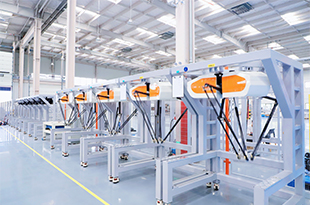 Learn More