China’s industrial robot industry has achieved remarkable breakthroughs from scratch and realized independent technological control, marking China’s steady ascent toward the mid-to-high end of the global value chain.
As a rising powerhouse in China’s light industrial robot sector, Zhejiang Robotphoenix Intelligent Technology Co., Ltd. demonstrates the innovative prowess of Chinese manufacturing through its full-stack independent R&D ecosystem covering robotic brain, vision, manipulators and mobile chassis. Recently, the company launched its global offering and is set to list on the Main Board of the Hong Kong Stock Exchange.
According to the 2023 China Industrial Robot Market Research Report released by GGII in January 2024, domestic industrial robots secured a 52.45% domestic market share, surpassing foreign brands in sales volume for the first time.
"Since 2023, the market monopoly of traditional industry giants including ABB, KUKA, FANUC and Yaskawa in China has been completely broken," Zhang Sai, founder of Robotphoenix, stated in an interview with Oriental Outlook Weekly. "This not only signifies the vigorous rise of China’s industrial robot sector, but also unveils vast overseas market prospects for homegrown robotic products."
Endowed with a childhood passion for machinery and robots, Zhang Sai has long devoted himself to core technological research. He leads Robotphoenix to break foreign brand dominance, expand application scenarios for domestic industrial robots, and showcase solid technological strength of Chinese robotics worldwide.
Rooted in Original Aspiration, Persistent in Tech Innovation
Around 2010, China lagged far behind global peers in manufacturing automation, suffering from core tech bottlenecks and heavy reliance on imported high-end equipment. This situation fueled Zhang Sai’s resolve: to develop self-owned high-end industrial robots and free Chinese smart manufacturing from external restraints.
Born in Jinan, Shandong in 1983, Zhang Sai was an outstanding student from an early age. A top graduate from Jinan Foreign Language School, he declined a guaranteed admission to Zhejiang University and was admitted to Tsinghua University with outstanding academic performance.
After graduating from Tsinghua, he pursued his master’s degree in mechanical engineering at Columbia University in the United States. Immersed in world-class engineering technologies and industrial concepts, he firmed up his aspiration to serve the country through technological innovation.
Upon returning to China, he joined Chen Hsong Group, a leading global injection molding machine manufacturer. Within five years, he led the certification of all product models in compliance with CE and national GB standards, and built China’s first dedicated assembly line for complete injection molding machines. His transition from a technical scholar to an industrial practitioner clarified his entrepreneurial vision: to develop market-oriented industrial robots tailored for Chinese manufacturers and boost industrial intelligent upgrading.
Back in 2012, industrial robots remained a niche sector in China, with parallel robots barely explored by local enterprises. Despite widespread doubts over the tough track, Zhang Sai spotted huge market opportunities amid industry gaps and founded Jinan Robotphoenix Automation Technology Co., Ltd.
"Domestic robots gained little market recognition at that time, and local clients were highly skeptical of homegrown brands. Our biggest challenge was not only product development but also market promotion," Zhang Sai recalled.
In 2013, the company rolled out its first parallel robot yet faced sluggish sales. To win market recognition, Zhang Sai and his team traveled across the country, proposing a trial-first business strategy to win client trust.
Shandong Hualu Pharmaceutical became their first pioneer client.
In 2016, Robotphoenix secured a milestone project for seasoning packaging lines at Unilever’s Jinshan factory in Shanghai. Faced with extremely stringent technical requirements, the team rented on-site workshops to replicate the full production line, even simulating manual feeding to verify full-process operational stability. Ultimately, its robots earned full recognition from Unilever with exceptional precision and reliability.
Since then, Robotphoenix has established stable partnerships with leading enterprises including Dong’e Ejiao, Lens Technology, Bloomage Biotech and GoerTek.
From Customized Solutions to Standardized Mass Production
The entrepreneurial journey was fraught with hardships. In 2016, the company encountered severe cash flow crisis hovering on the verge of dissolution. At the critical moment, Zhang Sai sold his personal properties to repurchase corporate shares, pulling the company through the toughest period.
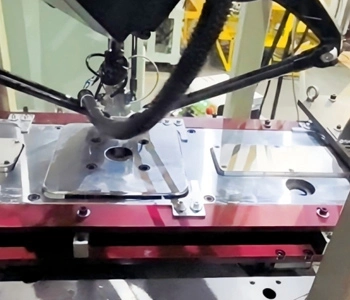
By 2018, Robotphoenix ranked among China’s top parallel robot suppliers with repeat positioning accuracy reaching 0.08mm, attaining world-class technical standards and breaking foreign brand monopoly. The company also delivered turnkey automated production lines featuring integrated robots, control systems and on-site services to meet diversified customized demands.
Nevertheless, over-reliance on non-standard customization made the company widely regarded merely as a system integrator, overshadowing its core advantages in robot body R&D and squeezing profit margins.
In 2022, Zhang Sai led a strategic reshuffle, spinning off the industrial robot division to focus on standardized robot body development and mass production.
His core development philosophy is to extract universal modules from customized projects. Drawing on abundant practical scenario data accumulated over years, the team developed standardized functional modules covering tray arranging, pallet stacking and bagged material handling, enabling rapid project deployment, higher delivery efficiency and lower operational costs via flexible module combination.
The standardized strategy brought remarkable achievements: the revenue proportion of standalone robot products surged from 5% in 2022 to 31.9% in 2025, driving simultaneous growth in profitability and market scale.
Frost & Sullivan data shows that Robotphoenix ranks fourth among Chinese suppliers specializing in light industrial robots and supporting solutions based on 2025 revenue.
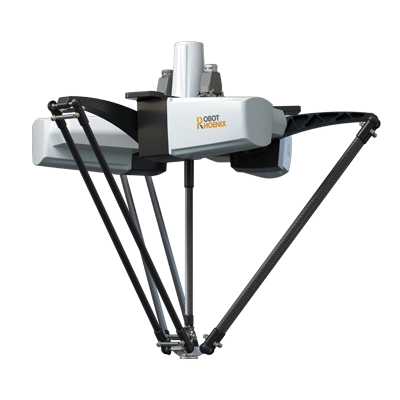
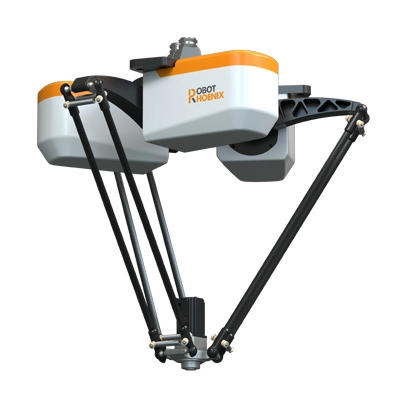
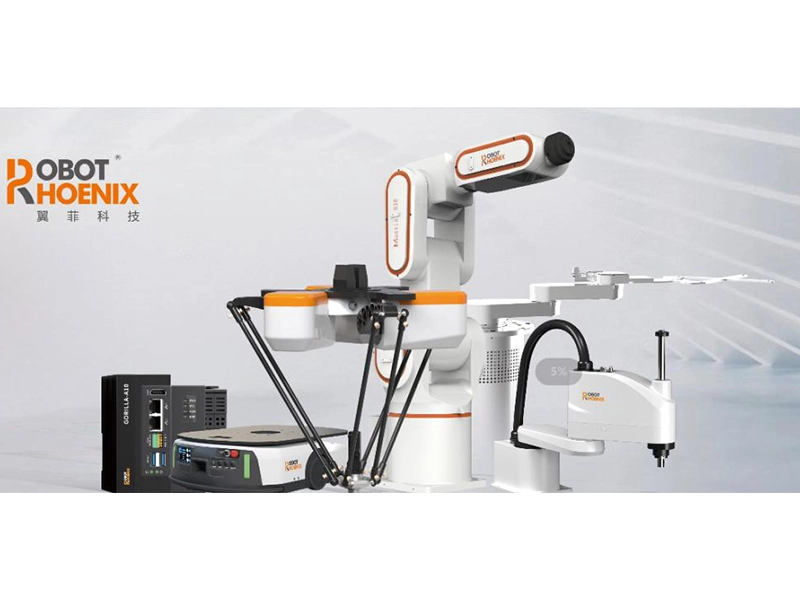
Adhering to demand-driven innovation, the company has independently developed proprietary control and vision systems, and built a full-spectrum product lineup including parallel robots, AGV/AMRs, SCARA robots, wafer handling robots and 6 axis robot products covering all mainstream light industry automation scenarios. Zhang Sai always believes core technologies must serve real market demands,allowing Robotphoenix to keep advancing its capabilities in advanced industrial robotics for light industrial automation.
Embracing the Future of Embodied Intelligence
In 2025, Robotphoenix officially stepped into the embodied intelligence track. "Our greatest edge lies in in-depth insight into actual industrial demands," Zhang Sai noted. With long-term cooperation with thousands of manufacturers, the company gains access to authentic on-site production data, ensuring its embodied intelligence R&D is fully grounded in industrial realities rather than impractical theoretical innovations.
Amid the booming embodied intelligence trend, Zhang Sai maintains rational judgment: there is no need to duplicate basic repetitive tasks with new intelligent equipment.
In his view, the core value of embodied intelligence lies in tackling tough industrial challenges beyond the reach of traditional robots, instead of redundant repetitive development.
Traditional industrial robots excel at high-speed, high-precision standardized operations yet struggle greatly in flexible manufacturing scenarios, which remain the last frontier of industrial intelligent transformation.
Unlike peers focusing solely on general-purpose humanoid robots, Robotphoenix targets segmented industrial pain points such as temporary production line adjustment and rapid production switching, ensuring technological innovations effectively empower industrial upgrading.
Zhang Sai regards industrial robots as an early form of embodied intelligence integrating mechanical execution and intelligent decision-making, and believes they will become essential infrastructure for future smart manufacturing.
"AI evolves by leaps and bounds. Just as ChatGPT revolutionized natural language processing, embodied intelligence will eventually achieve group intelligent evolution. Comprehensive industrial smart manufacturing will arrive when robots realize autonomous learning and decision-making beyond simple human motion imitation," he said. Robotphoenix is poised to seize this historic opportunity to secure leading positions in industrial embodied intelligence applications and pioneer new paths for China’s manufacturing smart transformation.
In November 2025, Robotphoenix unveiled its first wheel-legged humanoid robot Hogene. Equipped with dual lifting and wheeled motion structure plus bionic dual arms, and powered by self-developed YiBrain multi-modal large model, it supports omnidirectional movement and adapts to over 95% of industrial scenarios, marking a solid stride forward in embodied intelligence layout.
Dual Global Expansion: Products & Services Going Global
In 2023, Zhang Sai seized overseas market opportunities and initiated comprehensive global layout.
"We adopt a two-pronged overseas expansion strategy," he explained. On one hand, the company follows long-term core clients such as Lens Technology and GoerTek to provide customized automation solutions for their overseas factories. On the other hand, it actively explores emerging markets via international exhibitions and authorized distributors, realizing synchronized export of both products and professional after-sales services.
Robotphoenix robotic solutions have been widely applied in factories across Southeast Asia, Europe, North America and South America. Beyond product delivery, its global outreach showcases Chinese robotic technological strength and facilitates in-depth integration between Chinese smart manufacturing and global industrial chains.
While expanding overseas business, the company also optimized domestic industrial layout. In June 2025, Robotphoenix became the first robotic enterprise to settle in Yuhuan South Bay Intelligent Valley, deeply integrating with local pillar industries and fueling regional manufacturing intelligent upgrading.
To build a world-class Chinese robot enterprise has always been Zhang Sai’s lifelong dream and Robotphoenix’s core corporate mission.
Transformer collections displayed in the company’s Jinan exhibition hall reflect his persistent childhood mechanical dream. He named the listing project "All Spark", symbolizing new vitality and infinite possibilities. For him, IPO is never an end, but a brand-new starting point toward global industrial leadership.
Against the backdrop of China’s national strategy to advance the "AI Plus" initiative and foster new productive forces, industrial robots stand as core carriers of smart manufacturing and critical landing platforms for AI technologies.
Moving forward, driven by in-depth integration of AI, big data and IoT, industrial robots will become smarter, more flexible and more efficient, while industrial embodied intelligence and humanoid robots will emerge as new industrial growth drivers.
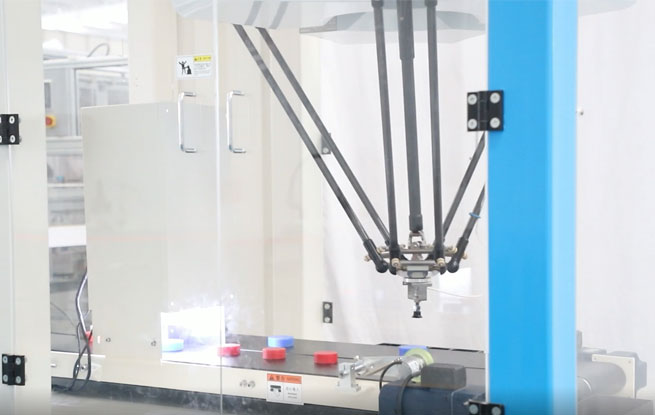
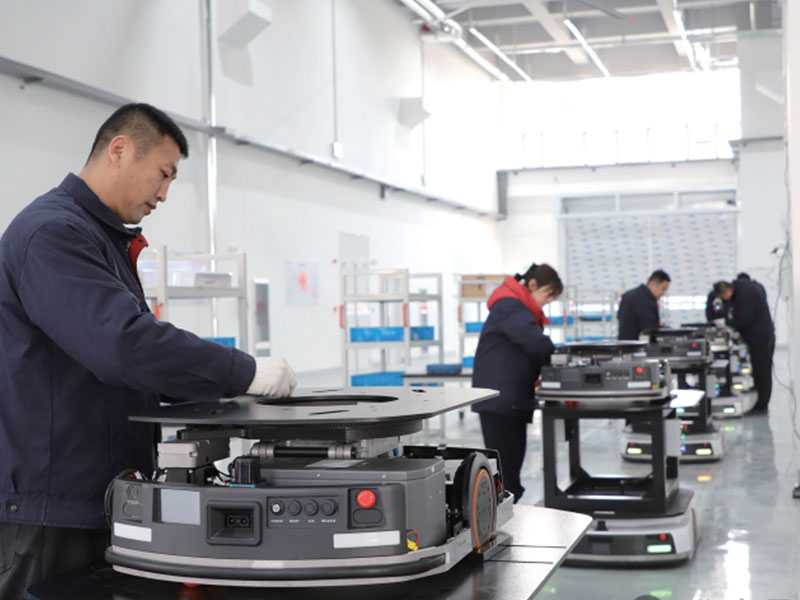
Inside Robotphoenix’s modern workshops in Yuhuan, sorting robots undergo precise pre-delivery calibration and AGVs complete operational debugging in orderly arrangement. Looking at the bustling intelligent production scene, Zhang Sai expressed full confidence: "We will leverage robotic power to fuel the comprehensive smart leap of Chinese smart manufacturing."

 EN
EN  ja
ja  ko
ko  fr
fr  de
de  es
es  ru
ru  pt
pt  ar
ar  vi
vi  ur
ur 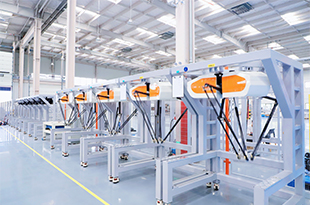 Learn More